Renting a roll-off dumpster is one of the most efficient ways to clear out a property, execute a home renovation, or manage a construction site in Georgia. However, throwing items into a waste container without knowing local disposal rules can quickly lead to unexpected overage fees, environmental fines, or landfill rejections.
Municipal landfills and transfer stations across Georgia operate under strict environmental protection standards set by the Georgia Environmental Protection Division (EPD) and local county solid waste authorities. To ensure a smooth, legal, and hassle-free rental experience, you need to know exactly what materials are allowed—and what must be excluded—before loading your container.
What CAN Go in Your Dumpster in Georgia
Roll-off dumpsters are designed to handle heavy volume across residential, commercial, and construction waste streams. As long as items are non-hazardous, dry, and contained within the fill line, the following categories are fully approved:
APPROVED MATERIALS
- General Household Junk & Furniture
- Construction & Demolition (C&D) Waste
- Roofing & Building Materials
- Yard Waste & Organic Landscaping Debris
- Concrete, Asphalt, Brick, & Masonry (In Approved Loads)
General Household Junk & Clearing
- Furniture: Couches, sofas, tables, wooden chairs, dressers, desks, nightstands, and bed frames.
- Household Belongings: Clothes, toys, rugs, carpets, curtains, sports gear, kitchenware, cardboard boxes, and general clutter.
- Fixtures & Hardware: Cabinets, countertops, sinks, bathtubs, interior doors, and laminate flooring.
Construction & Demolition (C&D) Debris
- Drywall & Sheetrock: Cutoffs, wallboard, and plaster.
- Lumber & Wood: Framing studs, plywood, pallets, subflooring, trim, and wooden fencing.
- Flooring Materials: Hardwood planking, ceramic or vinyl tile, subfloor sheeting, and underlayment.
- Glass & Metals: Window frames, scrap metal, aluminum siding, copper piping, and ductwork.
Roofing Materials
Asphalt shingles, felt paper, flashing, underlayment, and roof decking.
Yard Waste & Landscaping Debris
Tree branches, brush, logs, grass clippings, leaves, mulch, and soil. (Note: Organic land-clearing debris is fully allowed in standard containers, though heavy soil/dirt must be monitored for weight limits).
Heavy Masonry (Concrete, Asphalt, Brick)
Clean concrete, asphalt chunks, brick, pavers, and stone aggregate. (Note: Heavy materials require specific placement guidelines and smaller container sizes, such as a 20-yard container, to keep from exceeding legal transport weight limits).
What CANNOT Go in a Dumpster in Georgia
To comply with Georgia state regulations and protect waste removal crews, certain hazardous, toxic, liquid, and regulated materials are strictly prohibited from roll-off containers. Placing these items in your dumpster can trigger sorting surcharges, landfill turn-aways, or immediate unloading requirements.
PROHIBITED ITEMS
- ✘ Wet Paints, Lacquers, Stains, & Solvents
- ✘ Motor Oil, Gasoline, & Automotive Fluids
- ✘ Hazardous Chemicals, Pesticides, & Pool Chemicals
- ✘ Vehicle Tires & Heavy Rubber
- ✘ Car Batteries & Industrial Lithium Batteries
- ✘ Refrigerants & Freon Appliances (AC units, Fridges)
- ✘ Medical Waste & Biohazards
- ✘ Propane Tanks & Pressurized Vessels
Liquids, Solvents, & Chemical Hazards
- Wet Paint & Stains: Liquid latex paint, oil-based paint, varnishes, lacquers, paint thinners, and wood stains cannot be poured into a dumpster. (Workaround: Latex paint cans filled with kitty litter or sawdust until completely dried solid are accepted in standard household trash).
- Automotive Fluids: Motor oil, transmission fluid, brake fluid, radiator antifreeze, and gasoline containers.
- Household & Industrial Chemicals: Pesticides, herbicides, pool chlorine, drain cleaners, harsh acid solvents, and chemical fertilizers.
Electronics & Specialized Waste (E-Waste)
- Batteries: Lead-acid car batteries, industrial lithium-ion power tool batteries, and uninterruptible power supplies (UPS) pose serious landfill fire risks and are prohibited.
- Refrigerants (Freon): Refrigerators, freezers, window air conditioners, and dehumidifiers contain ozone-depleting Freon/CFCs. They cannot be landfilled unless certified as professionally drained and tagged by a licensed HVAC technician.
Tires & Heavy Rubber
Car, truck, tractor, and lawnmower tires are prohibited from general Georgia landfills because they trap methane gas and float to the surface of landfill cells.
Flammable & Pressurized Containers
Propane tanks, helium tanks, oxygen tanks, fuel canisters, and fire extinguishers are explosion hazards when crushed by compactor trucks and must be disposed of through specialty recyclers.
County-Specific Nuances Across Metro Atlanta
- Mattresses & Box Springs: In certain Georgia counties (such as Fulton, DeKalb, or Gwinnett), landfills charge extra processing fees per mattress because they do not compact easily. Always notify your rental representative if your project includes multiple mattresses.
- Electronics (TVs & Monitors): CRT monitors, old televisions, and computers face heavy restrictions at municipal transfer sites across Metro Atlanta. E-waste drop-offs are recommended for large volumes.
- Yard Waste Segregation: Some municipal facilities require yard waste (organics) to be separated from construction materials to support composting initiatives.
Financial & Operational Consequences of Prohibited Items
- Sorting Surcharges: If prohibited items are discovered during driver inspection or at the landfill tipping scale, sorting and handling surcharges will be assessed to safely remove the non-compliant waste.
- Landfill Turn-Aways & Delay Fees: Landfill operators can refuse to unload a container containing hazardous or unapproved waste. If a truck is turned away, the renter incurs dry-run fees and costs associated with reloading or hand-sorting the container.
- Safety Violations: Chemical leaks or battery-related fires inside transport trucks endanger drivers, equipment, and public roadways.
How to Responsibly Dispose of Prohibited Items in Metro Atlanta
- Paint & Household Chemicals: Utilize local Center for Hard to Recycle Materials (CHaRM) facilities in Atlanta or local county hazardous waste collection events.
- Automotive Oil & Lead Batteries: Most auto parts retailers (AutoZone, Advance Auto Parts) accept used motor oil and car batteries free of charge.
- Tires: Return used tires to local tire retail shops for a small eco-fee, or drop them off at designated county tire recycling drives.
- Electronics & Appliances: Local municipal recycling drives and scrap yards accept metal appliances, computers, and electronics.
Best Practices for Loading Your Dumpster Safely
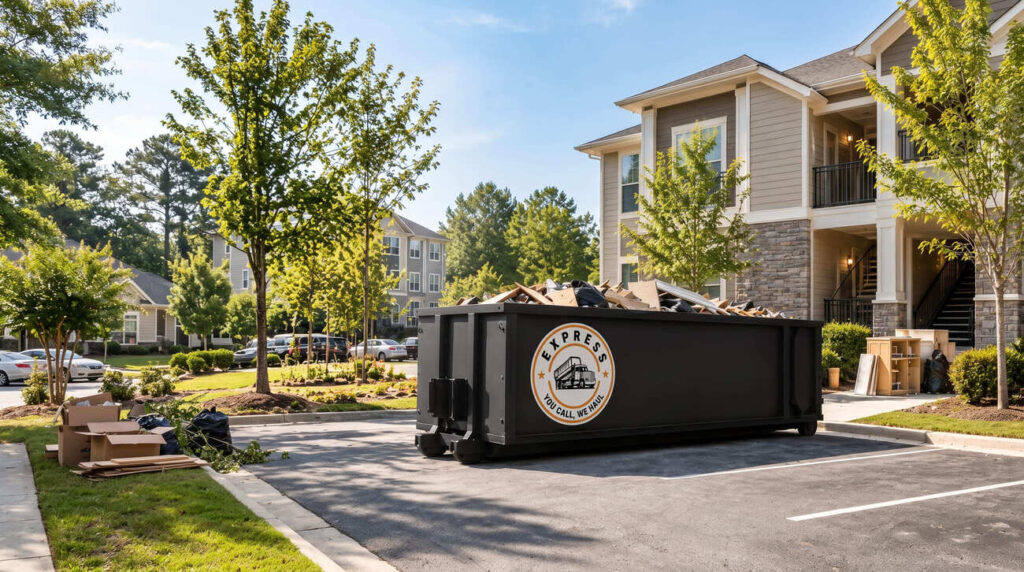
- Respect the Fill Line: Never stack debris higher than the top rim of the dumpster. Overfilled containers spill debris onto public roads during transit, creating serious safety hazards and preventing drivers from legally tarping the load.
- Distribute Weight Evenly: Place heavy items (furniture, masonry, framing timber) flat along the bottom first, filling in gaps with smaller household debris.
- Break Down Large Items: Disassemble large wooden furniture, cardboard boxes, and cabinetry to save space and prevent hollow gaps.
Rent Your Dumpster with Confidence in Metro Atlanta
Understanding disposal guidelines ensures your job runs cleanly, stays on budget, and avoids extra fees. If you ever have questions about whether a specific item can go into your container, the expert team at Express Hauling & Dumpsters is here to help.
Call 678.254.0594 today or visit expresshd.us to request a custom quote and select the perfect dumpster size for your next project!