

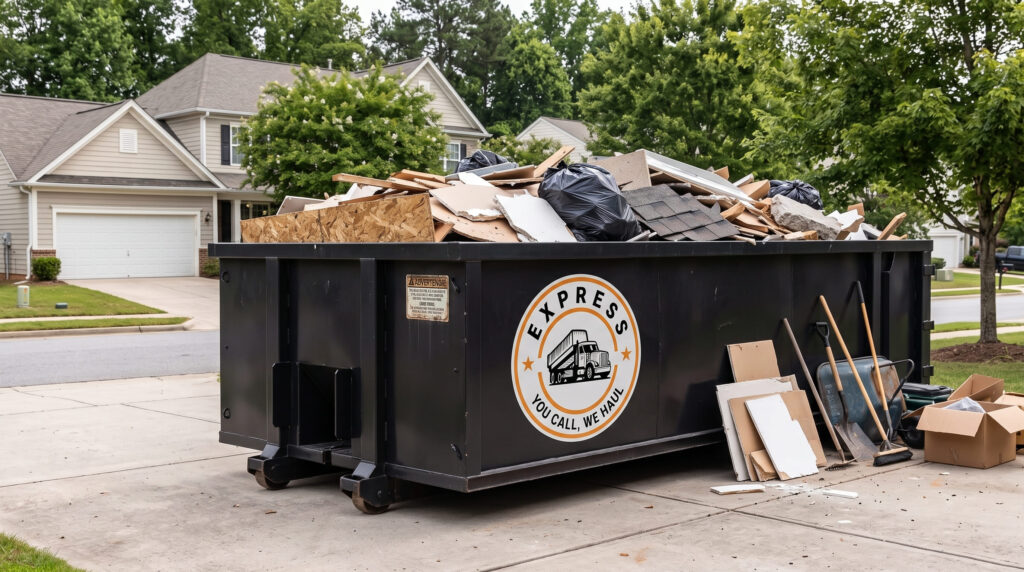
When renting a roll-off dumpster for a construction project, roof replacement, or home cleanout, most people focus almost entirely on volume—measuring how many cubic yards of space they need. However, there is a second critical factor that directly influences your total rental cost: weight capacity.
Every dumpster size comes with a built-in weight allowance. Exceeding this limit leads to overage fees at the landfill, which can quickly turn a budget-friendly project into an expensive oversight.
This comprehensive guide breaks down dumpster weight limits, explains how to estimate the weight of common project debris, details overage costs, and shows why choosing a larger dumpster upfront can often save you money.
Weight Allowances by Dumpster Size
Dumpster capacity is measured in cubic yards (volume) and tons (weight: 1 ton = 2,000 lbs). At Express Hauling & Dumpsters, every rental includes a generous baseline weight allowance tailored to standard residential and commercial projects:
| Container Size | Included Weight Allowance | Pickup Truck Equivalent | Typical Dimensions (L x W x H) | Best Suited For
|
|---|---|---|---|---|
| 15 Yard³ | Up to 2 Tons (4,000 lbs) | ~6 Pickup Loads | 16′ x 8′ x 4.5′ | Garage clearing, small kitchen/bath remodels, attic decluttering, light roofing. |
| 20 Yard³ | Up to 3 Tons (6,000 lbs) | ~8 Pickup Loads | 22′ x 8′ x 4.5′ | Concrete, asphalt, small demolitions, flooring removal, flood/fire cleanup. |
| 30 Yard³ | Up to 4 Tons (8,000 lbs) | ~12 Pickup Loads | 22′ x 8′ x 6.0′ | Whole-home interior remodels, commercial cleanouts, land clearing, structural demo. |
| 40 Yard³ | Up to 5 Tons (10,000 lbs) | ~16 Pickup Loads | 22′ x 8′ x 8.0′ | Commercial construction, major building demolition, 3+ bedroom renovations. |
Material Weight Estimator: How Much Do Common Debris Weigh?
Understanding how volume relates to weight is key to choosing the right container. Light, bulky items (like old couches or cardboard boxes) quickly fill up space without adding excessive weight. Heavy materials (like dirt, concrete, or roofing shingles) reach weight limits long before the container is full.
ESTIMATED WEIGHT BY MATERIAL
- Roofing Shingles: 220–250 lbs per square (100 sq ft)
- Concrete & Brick: 2,000–2,400 lbs per cubic yard
- Drywall / Sheetrock: 50 lbs per 4’x8′ sheet (1/2″ thick)
- Hardwood Flooring: 2.5–3.0 lbs per square foot
- Mixed Household: 150–300 lbs per cubic yard
- Dirt / Soil / Sand: 2,200–3,000 lbs per cubic yard
Roofing Shingles
Standard 3-tab asphalt shingles weigh approximately 220 to 250 lbs per “square” (100 square feet of roof area, single layer). Architectural shingles weigh approximately 250 to 320 lbs per square.
Example: A 2,000 sq. ft. roof with a double layer of architectural shingles can easily weigh over 5 to 6 tons. A 15-yard container (which includes 2 tons) would be overloaded, making a larger container or multiple hauls necessary.
Concrete, Asphalt, & Brick
Heavy masonry is extremely dense, weighing between 2,000 to 2,400 lbs per cubic yard (about 1 ton per yard!).
Warning: Filling a 30-yard or 40-yard dumpster with concrete will make the container illegal to transport under Department of Transportation (DOT) weight restrictions. Heavy materials like concrete should be disposed of in dedicated 15-yard or 20-yard heavy-duty loads.
Drywall & Construction Lumber
A single 1/2-inch thick 4′ x 8′ sheet of drywall weighs roughly 50 lbs. 100 sheets of drywall equal 2.5 tons (5,000 lbs).
Household Furniture & General Clutter
Household waste is generally light. An entire attic or garage cleanout usually averages 150 to 250 lbs per cubic yard. A fully loaded 15-yard dumpster filled with furniture and box clutter typically weighs between 1.5 and 2 tons, fitting comfortably within standard weight allowances.
How Overage Fees Work ($90 per Excess Ton)
When your dumpster is picked up, the driver hauls the container directly to a state-certified landfill or transfer station scale. The scale weighs the truck with the container (gross weight) and subtracts the empty weight of the truck and container (tare weight) to calculate your exact payload.
If your payload stays within your included weight allowance, you pay nothing extra. If your load exceeds the included tonnage, an overage fee is applied to cover the additional disposal charges assessed by the landfill.
At Express Hauling & Dumpsters, overage fees are clear and transparent: $90 per excess ton.
Overage Fee Calculation Example:
- You rent a 15-Yard Dumpster (Includes 2 Tons / 4,000 lbs).
- Your demolition project yields 3.5 Tons of drywall and tile.
- Excess Weight: 3.5 tons – 2.0 tons = 1.5 excess tons.
- Overage Fee: 1.5 tons x $90 = $135 additional fee.
Why Renting a Larger Size Upfront Is Often Cheaper
Many renters try to save money by ordering the smallest possible dumpster size. However, if your debris exceeds the included weight limit, overage fees can quickly surpass the cost difference of simply upgrading to a larger container from the start.
Key Reasons to Upgrade Size Upfront:
- Higher Weight Allowance: Moving from a 15-yard (2 tons) to a 20-yard (3 tons) or 30-yard (4 tons) container increases your included weight capacity right out of the gate.
- Avoid Double-Haul Costs: If you undersize your container and overfill it, you may need to order a second dumpster haul. Paying for a second container delivery is significantly more expensive than upgrading to a larger size initially.
- Peace of Mind: Sizing up provides a comfortable cushion for unexpected debris discovered midway through your project.
The Fill Line Rule and Highway Safety Laws
- Never Load Past the Rim: Debris stacked above the top edge of the container cannot be securely tarped. Drivers are legally prohibited from transporting uncovered, overflowing loads that risk spilling onto public highways.
- Avoid Dry-Run Fees: If a driver arrives and finds a container unsafe to haul due to severe overfilling, you may incur a dry-run fee while you remove the excess debris.
Practical Tips to Keep Your Dumpster Weight in Check
- Keep Water Out: Rainwater soaked into wood, mattresses, drywall, and carpets adds hundreds of pounds of unnecessary water weight. Cover your dumpster with a tarp during rainstorms to protect your load from excess weight.
- Break Down Hollow Items: Smash wooden boxes, break down cabinetry, and flatten furniture to ensure dense placement.
- Separate Masonry & Dirt: If your job involves concrete or soil, inform your service rep. Dedicated heavy-material containers keep your costs predictable and safe.
- Consult the Experts: If you are unsure about the weight of your materials, call your dumpster representative with your project dimensions for a custom weight recommendation.
Calculate Your Project Weight and Rent the Right Size Today
Don’t let weight confusion disrupt your project budget. The team at Express Hauling & Dumpsters helps contractors, homeowners, and business managers across Metro Atlanta select the ideal container size and tonnage limit for any project.
Call 678.254.0594 today or visit expresshd.us to review container options, get a transparent quote, and book your roll-off dumpster delivery today! Request a quote for a dumpster.