
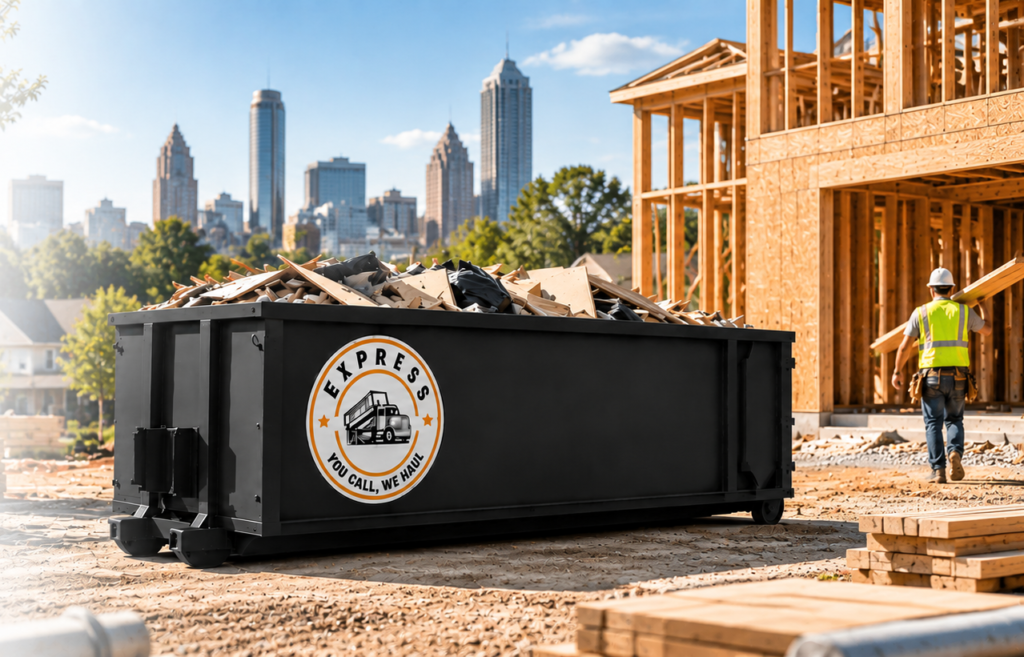
On any commercial construction, demolition, or large-scale residential renovation jobsite across Metro Atlanta, waste management isn’t just a cleanup detail—it is a critical logistical pillar. A delayed swap-out can stall trade crews, overflow staging areas, trigger OSHA safety violations, and attract municipal fines from the City of Atlanta or surrounding county inspectors.
Navigating waste management in the Atlanta metropolitan area comes with unique local challenges. From tight urban footprints in Midtown and Buckhead to strict City of Atlanta Department of Transportation (ATLDOT) public right-of-way rules, general contractors and project managers need a reliable waste partner and a clear operational playbook.
This comprehensive guide covers everything general contractors, subcontractors, and property owners need to know about renting construction dumpsters in Atlanta: selecting the correct volume, managing Construction and Demolition (C&D) material streams, securing local permits, and optimizing jobsite hauling schedules.
Choosing the Right Dumpster Size by Project Scale
Selecting the wrong dumpster size is one of the quickest ways to blow your jobsite budget. Renting a unit that is too small leads to double-handling debris and paying for extra haul fees. Conversely, renting an oversized container wastes valuable jobsite footprint and budget.
Roll-off containers for Construction and Demolition (C&D) debris are measured in cubic yards, representing the volume of material the container holds. Below is a breakdown of standard sizes, weight limits, and ideal commercial applications across Metro Atlanta sites.
+-------------------------------------------------------------------------------+
|                      ROLL-OFF DUMPSTER CAPACITY GUIDE                         |
+-------------------------------------------------------------------------------+
| 10 YARD  | [████████]                     | ~2-3 Tons  | Heavy Concrete/Dirt  |
| 15 YARD  | [████████████]                 | ~3-4 Tons  | Roofing/Kitchen Demo |
| 20 YARD  | [████████████████]             | ~3-4 Tons  | Framing/Medium Demo  |
| 30 YARD  | [████████████████████████]     | ~4-5 Tons  | Major Commercial C&D |
| 40 YARD  | [██████████████████████████████] | ~5-6 Tons  | Ground-Up / Full Demo|
+-------------------------------------------------------------------------------+
10-Yard Roll-Off Dumpsters: Heavy Material & Compact Sites
-
Dimensions: 12 ft L × 8 ft W × 3.5 ft H
-
Typical Weight Limit: 2 to 3 Tons (4,000–6,000 lbs)
-
Best Used For: Heavy inert debris such as concrete, brick, dirt, tile, masonry, and asphalt.
-
Jobsite Fit: Due to strict highway haulage weight limits enforced by the Georgia Department of Transportation (GDOT), heavy materials like dirt or concrete cannot be placed in large 30 or 40-yard containers without exceeding legal load thresholds. A 10-yard dumpster is engineered specifically to transport dense weight safely within compact urban footprints.
15 to 20-Yard Roll-Off Dumpsters: Roofing & Medium Renovations
-
Dimensions (20-Yard): 22 ft L × 8 ft W × 4.5 ft H
-
Typical Weight Limit: 3 to 4 Tons (6,000–8,000 lbs)
-
Best Used For: Commercial roof tear-offs (up to 30–40 squares of asphalt shingles), interior retail strip-outs, office tenant improvements, framing waste, and large deck removals.
-
Jobsite Fit: This is the most versatile utility size. The low side walls allow crews to load heavy debris over the side, while the rear swinging door enables easy walk-in loading of bulky fixtures and drywall sheet scrap.
30-Yard Roll-Off Dumpsters: Commercial Buildouts & Major C&D
-
Dimensions: 22 ft L × 8 ft W × 6 ft H
-
Typical Weight Limit: 4 to 5 Tons (8,000–10,000 lbs)
-
Best Used For: New commercial construction, multi-family renovation projects, structural timber waste, complete building buildouts, and extensive demolition debris.
-
Jobsite Fit: The workhorse of the commercial jobsite. A 30-yard roll-off balances high capacity for lighter structural waste (lumber, sheetrock, packaging) with manageable weight thresholds for standard dual-axle roll-off trucks.
40-Yard Roll-Off Dumpsters: Ground-Up Construction & Major Demolition
-
Dimensions: 22 ft L × 8 ft W × 8 ft H
-
Typical Weight Limit: 5 to 6 Tons (10,000–12,000 lbs)
-
Best Used For: Industrial ground-up projects, full structure teardowns, site clearing, large-scale commercial framing, and ongoing multi-stage developments.
-
Jobsite Fit: Maximum volume for high-bulk, lower-density waste streams. If your crew is generating substantial quantities of packaging, cardboard, wood pallets, and light demolition framing daily, the 40-yard unit keeps your site clean while minimizing total haul charges.
Approved C&D Materials vs. Prohibited Waste in Metro Atlanta
To maintain compliance with local transfer stations and Georgia Environmental Protection Division (EPD) landfills, construction waste streams must be sorted correctly. Mixing restricted items into a standard C&D container results in rejected loads, environmental surcharges, or costly delay fees.
Allowed Construction & Demolition (C&D) Materials
Standard roll-off construction containers accept non-hazardous materials resulting from construction, remodeling, repair, or demolition operations:
-
Dimensional Lumber & Wood: Plywood, studs, joists, pallets, and treated lumber.
-
Drywall & Masonry: Sheetrock, plaster, concrete block, brick, mortar, and stone.
-
Roofing & Exterior: Asphalt shingles, underlayment, vinyl siding, metal flashing, and gutters.
-
Metals: Copper pipe, rebar, steel studs, ductwork, conduit, and structural steel.
-
Fixtures & Finishes: Carpet, LVT flooring, cabinetry, insulation, glass, and fiberglass units.
Prohibited Items & Hazardous Materials
To protect haulers, processing personnel, and local landfills, the following items cannot be placed in standard construction dumpsters:
| Prohibited Material | Hazard / Compliance Issue | Recommended Alternative |
| Hazardous Chemicals & Paints | Wet paint, solvents, sealers, and chemical drums cause environmental contamination. | Latex paint must be dried with cat litter/sand; liquid chemicals require hazardous waste collection. |
| Asbestos-Containing Materials | Regulated air toxin under Georgia EPD rules. | Requires certified asbestos abatement contractors and specialized manifest disposal. |
| Refrigerants & Freon Units | HVAC units, fridges, and chillers containing ozone-depleting gases. | Units must be evacuated and tagged by a certified EPA HVAC technician before disposal. |
| Tires & Automotive Waste | Banned from Georgia municipal landfills due to gas trapping and floating risks. | Processed through specialized tire recycling facilities. |
| Batteries & Electronics | Heavy metals (Lead, Lithium) pose landfill fire and leaching hazards. | Dedicated e-waste recycling yards or battery drop-offs. |
Navigating Metro Atlanta Public Right-of-Way (ROW) Permits
Placing a roll-off dumpster on private commercial property, inside an enclosed jobsite staging yard, or on a private driveway does not require a municipal permit in most Metro Atlanta jurisdictions. However, urban construction sites in densely populated corridors—such as Downtown Atlanta, Midtown, Buckhead, Decatur, or Old Fourth Ward—frequently lack private driveway or yard space.
In these instances, the dumpster must sit on a public street, sidewalk, or designated parking lane. Placing a dumpster on a public road without proper permits will lead to immediate stop-work orders, municipal fines, and impoundment of the container.
City of Atlanta Permit Requirements (ATLDOT)
If your jobsite is located within the municipal limits of the City of Atlanta and requires street or right-of-way placement, you must secure an Occupancy/Right-of-Way (ROW) Permit through the City of Atlanta Department of Transportation (ATLDOT).
+-----------------------------------------------------------------------------------+
|                  CITY OF ATLANTA ROW PERMIT CHECKLIST FOR DUMPSTERS              |
+-----------------------------------------------------------------------------------+
| [✓] Submit application via the official City portal (ATLDOT / Accela).            |
| [✓] Provide accurate site plan highlighting exact dumpster footprint and lane width.|
| [✓] Supply active Certificate of Insurance (COI) naming City of Atlanta as added. |
| [✓] Install high-visibility reflective tape/markers on outer dumpster edges.      |
| [✓] Maintain minimum 10-foot clear width for emergency vehicle access (traffic).  |
| [✓] Place traffic safety cones/barricades at upstream traffic approach side.     |
+-----------------------------------------------------------------------------------+
Key Steps to Secure Your Atlanta Street Permit:
-
Application Portal: Applications are processed through the City of Atlanta’s online permitting system. Apply at least 5 to 7 business days prior to scheduled container delivery.
-
Site & Traffic Plan: You must provide a sketch showing where the dumpster will sit relative to driving lanes, fire hydrants, crosswalks, and driveways.
-
Safety & Visibility Equipment: ATLDOT mandates that dumpsters placed on public streets feature Type II reflective markers or barricades on the traffic-facing corners to ensure nocturnal visibility.
-
Traffic Lane Clearances: The placement must maintain adequate lane clearances for emergency vehicles (typically 10 to 12 feet of remaining road width) and cannot block fire hydrants or transit stops.
Surrounding County & Municipal Regulations
If your project sits outside the City of Atlanta proper, local ordinances vary across the Metro area:
-
Fulton County & Cobb County: Require Right-of-Way Encroachment Permits through their respective County DOT offices if blocking public thoroughfares or road shoulders.
-
DeKalb County & Gwinnett County: Street placement without a permit or traffic control management plan is strictly prohibited on county-maintained roads. On residential streets with active Homeowners Associations (HOAs), HOA approval is required prior to placement.
Pro Tip for General Contractors: Partnering with an experienced local hauler like Express Hauling & Dumpsters eliminates logistical guesswork. We help verify site placement feasibility, provide proper placement dimensions for your application, and ensure delivery teams position containers safely in full compliance with local ordinances.
Jobsite Logistics: Swap-Outs, Scheduled Hauls, and Rotations
A bottleneck in debris management stops progress across every trade. If framers, drywallers, or demolition crews run out of waste container space, material stacks up on the slab, creating slip and trip hazards that draw swift warnings from site safety inspectors.
To keep high-volume commercial projects running on schedule, general contractors must establish a proactive haul and swap strategy.
+-------------------------------------------------------------------------------+
|                      HIGH-VOLUME ROTATIONAL SWAP TIMELINE                     |
+-------------------------------------------------------------------------------+
| 07:00 AM | Crew completes daily site clearance into active dumpster.          |
| 03:00 PM | Site Manager submits swap request (Target: 80% container capacity). |
| 07:00 AM | Express Hauling truck arrives with EMPTY container.                |
| 07:15 AM | Full container pulled; fresh container dropped in exact footprint.|
| 07:30 AM | Zero jobsite downtime. Trades continue working uninterrupted.       |
+-------------------------------------------------------------------------------+
1. Establish Turnaround Expectations
Standard single-container rentals work well for small jobs, but commercial builds require predictable turnarounds. Work with a hauler that offers guaranteed 24-to-48-hour turnarounds for container swaps, along with same-day emergency pull options for critical project phases.
2. Implement the “80% Capacity Rule”
Never wait until a dumpster is overflowing past the top rail to call for a swap. By law, roll-off drivers cannot transport overfilled containers where debris rises above the side walls (“top-loaded” or “unsafe load”).
-
Dispatch a swap request when your active dumpster reaches 80% capacity. This gives your hauler time to route a driver while giving your trade crews enough remaining capacity to finish their current shift without interruption.
3. Staging and Multi-Container Rotations
On large commercial construction or multi-story demolition projects:
-
Dual-Container Staging: If jobsite space permits, stage two containers side-by-side—one dedicated to heavy C&D waste (masonry/drywall) and one dedicated to recyclable metal or wood framing.
-
Live Load / Swap Rotations: For tight urban spaces with zero street staging room, arrange scheduled “live swaps,” where the roll-off truck pulls the full unit and drops a fresh unit directly into the exact same footprint during off-peak traffic hours (e.g., early morning before 7:00 AM).
Streamline Your Metro Atlanta Jobsite Waste Today
Efficient waste management boils down to three simple factors: selecting the proper container volume for your specific waste density, securing local street placement permits before delivery day, and locking in a responsive haul-and-swap schedule.
At Express Hauling & Dumpsters LLC, we specialize in commercial, residential, and industrial dumpster rentals across Metro Atlanta. Whether you need a single 20-yard container for a interior strip-out or a multi-container rotational schedule for a major ground-up build, our local team delivers prompt service, transparent pricing, and zero hidden fees.
Ready to Lock In Your Jobsite Dumpster Schedule?
Keep your construction schedule on track and your jobsite completely clean.
👉 Click Here to Request Your Fast# Custom Quote or contact our Atlanta commercial dispatch team today to discuss dumpster sizes, permit requirements, and custom rotational swap plans for your next project.